



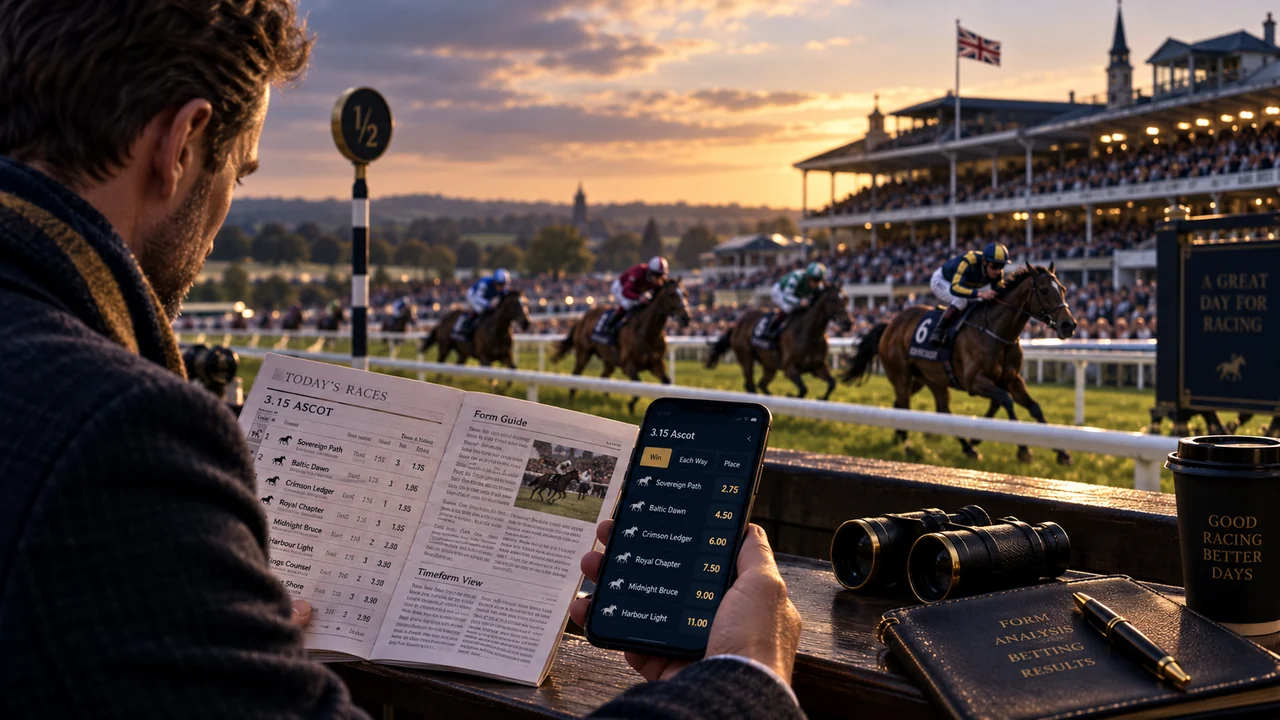




What makes a good UK sports betting site in 2026?
A good UK-facing sportsbook should be easy to verify, clear about who operates it, transparent about settlement and withdrawal rules, and equipped with meaningful safer-gambling tools. For customers in Great Britain, the first check is a current UK Gambling Commission licence. The size of a welcome offer comes later.
This guide is designed as a practical decision framework. It explains how to verify a licence, compare operators, understand odds, choose payment methods, read bonus terms, use in-play markets carefully, and recognise the protections that apply to regulated online betting.
Best UK betting sites: what to compare in 2026
The phrase best UK betting site is useful only if the comparison criteria are clear. One bettor may care about football market depth, another may prefer horse-racing features, and another may prioritise fast withdrawals or a clean mobile app. Those preferences matter, but they should sit on top of a basic trust layer rather than replace it.
For customers in Great Britain, that trust layer starts with a current remote betting licence from the UK Gambling Commission. It also includes accurate operator identity, published settlement rules, accessible complaints information, age and identity controls, and safer-gambling tools. A polished homepage or familiar brand name is not a substitute for checking the underlying licence record.
The comparison below is deliberately licence-led rather than promotion-led. Promotions, odds boosts, qualifying requirements and withdrawal processing times change too quickly to be treated as permanent ranking factors. Before depositing, confirm the exact terms on the operator site and match the domain you are using to the relevant UKGC record.
| Operator | UKGC account / structure to check | Best known for | What to verify before joining |
|---|---|---|---|
| bet365 | 55148 - Hillside (UK Sports) ENC | Broad sports coverage, live betting, racing | Current betting activity, payment methods, withdrawal rules and live offer terms |
| William Hill | 39225 - WHG (International) Limited | Established UK brand, football and racing | Exact domain, sports product licence, settlement rules and current promotions |
| Paddy Power | Multiple Flutter entities, including 39439 / 39426 / 39411 | Football, racing, specials and mainstream markets | Match the product and domain to the relevant licensed entity rather than assuming one account covers everything |
| Betfair | Multiple entities across sportsbook, exchange and casino | Betting exchange plus sportsbook | Check whether you are using sportsbook or exchange and verify the entity and commission or settlement rules that apply |
| Ladbrokes / Coral | 54743 - LC International Limited for remote products | Football, racing and broad event coverage | Confirm the current domain, remote betting activity, withdrawal conditions and market rules |
| Sky Bet | 67370 - SBG Sports Limited | Football-led app experience and mainstream UK sports | Use the current licence account rather than older migrated records and check current reward terms |
| Betway | 39372 - Betway Limited | Football and multi-sport betting | Confirm active remote betting status, domain details, market settlement and withdrawal conditions |
| BoyleSports | 39469 - Boylesports Enterprise | Football, racing and traditional bookmaker markets | Confirm active betting activities, payment methods and published settlement rules |
Search the UKGC register by the exact website domain, trading name or account number. A regulator logo in a footer is useful, but the live register is the stronger verification step because it shows the recorded business and licence status.
How we would compare two otherwise similar sportsbooks
If two sites are both properly licensed, the comparison becomes more practical. Look at whether the operator publishes clear house rules, how easy it is to find maximum payout information, whether void and abandoned-event rules are understandable, what happens to accumulators when one selection is void, and whether cash-out terms explain when an offer can disappear. These details matter because the quality of a sportsbook is experienced most clearly when something unusual happens.
Then compare the product itself. For football, look at market depth beyond a basic 1X2 line. For racing, check each-way terms, starting-price treatment, Rule 4 deductions and non-runner handling. For in-play betting, focus on the clarity of bet delays and suspended-market behaviour rather than simply the number of live markets.
- ✓Clear identityLegal entity, trading name and UKGC account are easy to find.
- ✓Transparent rulesSettlement, void bets, non-runners, maximum payouts and complaints are explained.
- ✓Useful market depthThe site covers the sports and bet types you actually use, not just headline events.
- ✓Withdrawal clarityVerification requirements, available methods and processing expectations are visible before a problem occurs.
- ✓Safer-gambling controlsLimits, time-outs and self-exclusion are prominent and usable.
- ✓Mobile usabilityBet slip, account history and responsible-gambling tools remain easy to reach on a small screen.
How UK sports betting regulation actually works
One of the most common mistakes in UK betting content is treating the legal framework as if it were identical across the entire United Kingdom. The UK Gambling Commission regulates commercial gambling in Great Britain - England, Scotland and Wales. Remote operators that provide gambling to consumers in Great Britain need the relevant Gambling Commission licence even if the company itself is based abroad.
Northern Ireland has a separate legal framework. That distinction does not make a practical difference to every reader, but it matters when a page makes a legal or licensing claim. A careful guide should say that UKGC licensing applies to Great Britain rather than loosely stating that a UKGC licence automatically describes the whole UK regulatory system.
UKGC licensing
Great Britain-facing remote sportsbooks need the appropriate Gambling Commission operating licence. Licensed remote operators must display their licensed status, account number and a link to their current licensed status.
Age and identity
Remote licensees must verify age before a customer can deposit, gamble or access free-to-play gambling games. Identity information is also verified before gambling is permitted.
Credit-card ban
Credit cards cannot be accepted for gambling in Great Britain. The restriction also covers gambling payments routed through an e-wallet when those funds originate from a credit card.
Player protection
Licensed operators must follow social-responsibility and technical standards, while GAMSTOP gives users a national online self-exclusion route across licensed websites and apps.
Important 2026 regulatory points
Credit-card gambling ban. Licensed operators in Great Britain cannot accept credit-card payments for gambling, including through money-service businesses or e-wallet routes that allow credit-card gambling funds.
£5 online slot limit for adults aged 25+. This is a casino-product rule for online slots, not a £5 cap on ordinary sports bets.
£2 online slot limit for ages 18 to 24. Again, this applies per online-slot game cycle rather than to sportsbook stakes.
New RTS deposit-limit wording takes effect. As of this guide's 7 September update, that specific wording is scheduled but not yet in force. The new rules clarify gross deposit limits and how financial-limit terminology is presented.
The £5 and £2 limits introduced in 2025 apply to online slot game cycles. They are important consumer-protection rules, but they do not mean a sportsbook customer is legally restricted to £5 or £2 on a football, racing or tennis bet.
How to verify that a UK betting site is genuinely licensed
A legitimacy check should take a few minutes, not a leap of faith. The easiest route is to begin with the operator's own footer and then verify what it claims against the Gambling Commission's public register. The register can be searched by business name, trading name, domain name or account number.
Find the legal operator details
Scroll to the website footer and note the company name, UKGC account number, regulatory wording and domain. If the site makes it difficult to identify the operating company, treat that as a reason to investigate further rather than relying on the brand name alone.
Search the official public register
Search the exact domain or trading name in the Gambling Commission register. Open the business record and confirm that the licence status is active rather than relying on a search-engine snippet or an old review page.
Confirm the right betting activity
A company can hold more than one gambling activity or use different entities for sportsbook, exchange and casino products. For ordinary online sports betting, check that the relevant remote betting activity is covered by the active record that corresponds to the site you are using.
Read the rules before depositing
Licence verification tells you that the operator is regulated. It does not tell you whether a particular market or bonus suits you. Read settlement rules, withdrawal information, maximum-payout provisions, complaints procedures and safer-gambling options before funding the account.
Red flags that deserve a second look
- The site claims to be licensed but does not show the operator's legal entity or account number.
- The domain you are using does not appear to match the domain or trading-name information in the official record.
- The page uses regulator logos as decoration but does not link to verifiable licensed status.
- Withdrawal rules are vague, difficult to find or materially different from the terms presented at registration.
- The operator encourages credit-card gambling or suggests a workaround for credit-card funding.
- Safer-gambling and self-exclusion tools are hidden, missing or described as optional customer-service favours rather than account protections.
Popular sports and betting markets in the UK
British betting culture is not simply a copy of the US sportsbook market. Football and horse racing sit at the centre of the traditional market, but cricket, rugby, tennis, darts, snooker and golf also have deep event coverage. The quality of a sportsbook therefore depends partly on whether its strongest markets match the sports you actually follow.
Football
Premier League, EFL, Champions League, international football and domestic cups. Core markets include 1X2, both teams to score, totals, handicaps, correct score, player props and accumulators.
Open football guide →Horse racing
Win, place and each-way betting remain fundamental UK products. Settlement details such as starting price, Rule 4 deductions, non-runners and each-way place terms deserve close attention.
Open racing guide →Cricket
Test matches, county cricket, The Hundred and major international tournaments create markets on match results, innings, runs, wickets and player performance.
Open cricket guide →Rugby
Rugby union and rugby league support match-result, handicap, total-points and try-scorer markets, with coverage increasing around major international competitions.
Open rugby guide →Darts and snooker
Both sports have strong UK audiences and frequent tournament schedules. Correct-score, handicap and player-specific markets are common.
Open darts & snooker guide →Tennis and golf
These individual sports are well suited to outright, match, set, group and player-performance markets, including substantial in-play coverage.
Open tennis & golf guide →Football betting: understand the market before building an accumulator
Football accumulators are familiar in Britain because they combine multiple selections into a single bet. The appeal is obvious: multiplying prices can create a much larger potential return. The trade-off is equally important: every leg generally needs to win for the accumulator to succeed, so adding selections also compounds the chance that one result will break the bet.
A better way to compare football sportsbooks is to inspect how clearly they display market rules and how consistently they price common markets. Look at 1X2, draw-no-bet, Asian or European handicaps, both teams to score, over/under goals, cards, corners and player markets. When comparing prices, use the same selection and market rules at the same time because football odds move continuously.
Horse racing: each-way terms can matter as much as headline odds
Horse-racing comparisons require more than finding the biggest win price. Each-way betting combines a win bet with a place bet, and the value of the place portion depends on the number of places and the fraction of the win odds paid for a place. Those terms can vary by race and by promotional enhancement.
Also check how the bookmaker handles non-runners, starting price, best-odds-guaranteed promotions if offered, dead heats and Rule 4 deductions. These are not obscure technicalities. They are the rules that determine how a racing bet is actually settled.
In-play betting and cash out
In-play betting is legal in Great Britain and widely offered, but the word "live" can be misleading if a customer assumes every screen is perfectly synchronised with the event. Broadcasts can be delayed, internet streams can be slower than stadium action, and bookmakers may add a processing delay before an in-play bet is accepted.
The Gambling Commission's technical standards require operators to make customers aware that others may have more up-to-date information during live events. That matters for fast sports, where odds can move or a market can suspend between clicking a selection and receiving confirmation.
Cash-out features are also dynamic. A displayed cash-out value is not a guaranteed standing offer. It can change, be suspended or disappear as the underlying market moves. Read the operator's cash-out terms and treat the feature as an optional settlement mechanism rather than money that is already yours.
Fractional vs decimal odds in the UK
UK sportsbooks commonly support both fractional and decimal odds. Fractional pricing remains culturally familiar, particularly in horse racing, while decimal odds make total-return comparisons straightforward. The economic meaning is the same: the format changes how the price is displayed, not the underlying probability or bookmaker margin.
With fractional odds such as 5/2, the first number represents potential profit relative to the second. A £2 winning stake at 5/2 returns £5 profit plus the £2 stake, for £7 total. Decimal odds such as 3.50 show total return per £1 staked, so a £2 stake returns £7 in total if it wins.
| Fractional | Decimal | £10 stake: total return | Implied probability | Common interpretation |
|---|---|---|---|---|
| 1/1 | 2.00 | £20.00 | 50.0% | Evens |
| 5/2 | 3.50 | £35.00 | 28.6% | £5 profit for each £2 staked |
| 4/1 | 5.00 | £50.00 | 20.0% | £4 profit for each £1 staked |
| 10/11 | 1.91 | £19.09 | 52.4% | Common near-even bookmaker price |
| 1/2 | 1.50 | £15.00 | 66.7% | Odds-on selection |
For a deeper explanation of bookmaker margin, implied probability, overround and each-way calculations, continue to our UK betting odds guide.
Payment methods, deposits and withdrawals
A regulated sportsbook still deserves a payment check before you deposit. The best method is not necessarily the one that funds an account fastest. Consider whether the same method supports withdrawals, whether fees apply, whether your bank may impose its own gambling controls, and what identity or source-of-funds information the operator may need under its legal obligations.
The clearest legal point is that credit cards cannot be accepted for gambling by the relevant licensed operators in Great Britain. This includes using a credit card through an e-wallet or other money-service route for gambling. Debit cards and eligible non-credit payment methods remain common.
| Method | Typical availability | Deposits | Withdrawals | What to check |
|---|---|---|---|---|
| Debit card | Very common | Usually immediate | Often supported | Bank controls, operator limits and verification requirements |
| Credit card | Prohibited for gambling | Not permitted | Not applicable | Do not use a site that encourages a credit-card workaround |
| PayPal / e-wallet | Common but operator-dependent | Usually quick | Often supported | The wallet must not be used to pass credit-card funds into gambling |
| Apple Pay / Google Pay | Operator-dependent | Usually quick | May differ by operator | Eligible underlying funding source and withdrawal route |
| Bank transfer | Available at many operators | Can be slower | Common for some withdrawals | Processing window, bank details and any minimum amount |
| Paysafecard / prepaid | Available at some sites | Useful for prepaid budgeting | Often requires another withdrawal method | Withdrawal limitations before choosing it for deposits |
Why identity checks sometimes affect withdrawals
Licensed operators must verify customer identity before gambling, and they may also need additional information later to satisfy legal obligations. However, the Gambling Commission states that a withdrawal request should not trigger a demand for information that the operator could reasonably have requested earlier. This is one reason to provide accurate account details at registration and respond promptly to legitimate verification requests.
Avoid creating multiple accounts, using someone else's payment method or entering a nickname instead of your legal details. Those shortcuts can create avoidable account and withdrawal problems even when the sportsbook itself is legitimate.
Welcome offers, free bets and promotional terms
Promotions are one of the least stable parts of a sportsbook comparison. A welcome offer can change while an article is still indexed, and two customers may see different eligibility rules. That is why this guide does not rank operators primarily by a headline bonus amount.
Instead, treat a promotion as a contract with conditions. Read the offer page before opting in, take a screenshot or save the terms if the promotion matters to your decision, and understand what the reward actually is. "£20 in free bets" is not automatically equivalent to £20 cash. A free-bet token may return only the winnings rather than the original token value, and it may expire if not used within the stated period.
Qualifying stake
Check how much must be staked with real money before a reward is triggered.
Minimum odds
A qualifying bet may need to meet a minimum price. Shorter odds can be excluded.
Eligible markets
Some promotions exclude each-way bets, cash out, certain sports or specific bet types.
Reward format
Know whether the reward is cash, free-bet credit, bonus funds, profit boost or another benefit.
Expiry
Rewards often expire. A good headline amount has little value if the usage window does not suit you.
Withdrawal impact
Understand whether the promotion changes how bonus funds, winnings or qualifying stakes are treated.
A promotion should not dictate your budget. If meeting the qualifying requirement means staking more than you would otherwise risk, the offer is not improving the bet for you.
How to sign up to a UK sportsbook safely
A good sign-up process is intentionally less frictionless than it used to be. Regulated online gambling requires age and identity controls, and operators may need information that confirms who you are. The safest approach is to treat verification as part of opening the account rather than as an obstacle to work around.
- Verify the licence first.
Check the exact domain and licensed business in the UKGC public register before creating the account.
- Use your real legal details.
Enter your name, address and date of birth accurately so that automated or document-based checks can match your identity.
- Read withdrawal and settlement rules.
Do this before funding the account, particularly if you care about maximum payouts, racing deductions, bet cancellations or cash-out treatment.
- Choose an eligible payment method.
Use debit, bank or another supported non-credit route. Check whether the same method can receive withdrawals.
- Set a budget before the first deposit.
A limit is more useful when it reflects your finances before emotion, a live match or a losing bet changes your decision-making.
- Opt in to a bonus only after reading the terms.
If the offer changes the way you would normally bet, consider ignoring it.
- Know the exit tools.
Locate time-out, financial-limit and self-exclusion options before you need them.
Responsible gambling, GAMSTOP and financial limits
Safer-gambling information should sit in the main decision journey, not in a small footer. A regulated sportsbook should make account controls accessible, and customers should know what those controls do before they become necessary.
GAMSTOP Online is a free self-exclusion tool for people who live in the UK. It blocks access to gambling websites and apps offered by licensed operators covered by the scheme. Current minimum exclusion periods include six months, one year, five years and five years with auto-renewal. An exclusion cannot simply be removed during its minimum period.
This is one area where the geographic wording differs from UKGC licensing. The Gambling Commission's remote licensing jurisdiction described in this guide is Great Britain, while GAMSTOP states that its online scheme is available to people living in the UK, including Great Britain and Northern Ireland.
Time-outs
Shorter account breaks can create distance from betting without beginning a longer self-exclusion period.
Financial limits
Deposit and other financial controls help define a budget before betting activity escalates.
GAMSTOP
Multi-operator online self-exclusion provides a broader barrier than closing one sportsbook account at a time.
Support
If gambling is causing harm, use confidential specialist support rather than relying only on willpower or account settings.
Deposit-limit changes coming on 30 September 2026
The Gambling Commission has published new technical wording for financial limits that is due to take effect on 30 September 2026. The key distinction is that a limit described to a customer as a "deposit limit" must meet the defined gross-deposit concept, and operators must offer gross deposit limits over specified durations. Other financial controls such as stake, loss or net-deposit limits may also be offered.
Because this guide is dated 7 September 2026, that specific new wording should be described as scheduled, not already in force. This date-sensitive distinction is important for any page that claims to explain the current 2026 rules.
Online slot stake limits
Separate from sportsbook deposit limits, online slots have maximum stake limits that took effect in 2025. The maximum per game cycle is £5 for customers aged 25 and over and £2 for adults aged 18 to 24. The Gambling Commission's guidance makes clear that these are online-slot limits. They do not cap the stake on an ordinary football, racing or other sports bet.
GAMSTOP Online is free. For broader confidential help, use established gambling-support services such as GambleAware and the National Gambling Helpline. If gambling is affecting your finances, relationships, work or mental health, seek support early.
For a step-by-step explanation of exclusion periods, account tools and practical barriers, read our dedicated UK responsible gambling and GAMSTOP guide.
Are UK betting winnings taxed?
For customers, gambling winnings in the UK are tax-free. The Gambling Commission confirmed this in a 2026 freedom-of-information response, explaining that tax is instead levied on gambling operators' profits through the relevant gambling duties.
That does not mean every financial situation involving gambling is automatically simple. Professional activity, business structures or money moved across jurisdictions can raise different tax questions, so a person with an unusual or commercial situation should use qualified tax advice. For ordinary customers, however, the standard rule is that gambling winnings themselves are not taxed as personal winnings.
What to do if something goes wrong
A licensed sportsbook can still make a mistake or apply a rule in a way you disagree with. Start by gathering the relevant bet ID, market description, time of placement, settlement result, account messages and the version of the operator's rules that applied. A precise complaint is easier to investigate than a general statement that a bet was "wrongly settled."
Use the operator's formal complaints procedure rather than relying only on live chat. If the complaint reaches deadlock, the operator should explain the next stage and any approved alternative dispute-resolution route that applies. The Gambling Commission is a regulator rather than a service for deciding individual bet-settlement disputes, so follow the operator's published escalation process.
Frequently asked questions
Are online sports betting sites legal in the UK?
Online sports betting is legal within the applicable regulatory frameworks. For consumers in Great Britain, remote operators providing gambling must hold the relevant UK Gambling Commission licence. Northern Ireland has a separate legal framework, so UKGC licensing should not be described as the whole UK legal system.
How can I check whether a sportsbook is UKGC licensed?
Use the Gambling Commission's public business register and search by domain name, trading name or account number. Match the live site you are using to the business and confirm the relevant licence status is active.
Can I use a credit card to bet online?
No at gambling operators covered by the Great Britain credit-card ban. The restriction has applied since 14 April 2020 and also prevents credit-card gambling funds from being routed through e-wallets.
What is the legal age for sports betting?
18 for ordinary sports betting. Remote operators must verify age before customers can deposit funds, gamble, or access free-to-play versions of gambling games offered by the licensee.
Do UK bettors pay tax on gambling winnings?
Gambling winnings for customers are tax-free in the UK. Gambling duties are levied on operators rather than ordinary customers' winnings.
Is in-play betting legal?
Yes. UKGC technical standards expressly address in-play betting. Operators must make customers aware that live broadcasts can be delayed and that other participants may have more up-to-date information.
Are fractional odds better than decimal odds?
No. They are display formats for the same underlying price. Fractional odds are traditional in Britain, while decimal odds make total-return calculations and cross-site comparisons easier.
Does GAMSTOP cover every gambling website?
No. GAMSTOP is designed to exclude users from licensed online gambling websites and apps covered by the scheme. It is not a technical block on every unlicensed website on the internet, which is another reason to avoid unlicensed operators.
What are the UK online slot stake limits?
The maximum per online-slot game cycle is £5 for adults aged 25 and over and £2 for adults aged 18 to 24. These are slot limits, not maximum stake rules for ordinary sportsbook bets.
What changes on 30 September 2026?
New UKGC Remote Gambling and Software Technical Standards wording on deposit and other financial limits is scheduled to take effect. In particular, the definition and presentation of gross deposit limits becomes more explicit.
How this UK guide is maintained
This page is built around information that can be checked rather than around claims that are difficult to keep current. Licensing statements are checked against UK Gambling Commission material, date-sensitive regulatory changes are labelled with their effective dates, and permanent comparison tables avoid relying on temporary welcome offers as the main ranking signal.
Operator account structures can change through corporate migrations, licence amendments and product restructuring. Always reconfirm the exact domain in the UKGC register immediately before registration. Likewise, promotions, payment availability, market coverage and withdrawal processing can change without notice.
Official sources and verification
- UK Gambling Commission - register of gambling businesses
- UKGC - remote gambling licensing guidance
- UKGC - display of licensed status
- UKGC - remote age-verification social-responsibility code
- UKGC - preventing credit-card use
- UKGC - online slot stake-limit guidance
- UKGC - deposit-limit changes effective 30 September 2026
- UKGC - in-play or in-running betting
- GAMSTOP Online - scheme overview
- UKGC - gambling winnings for customers