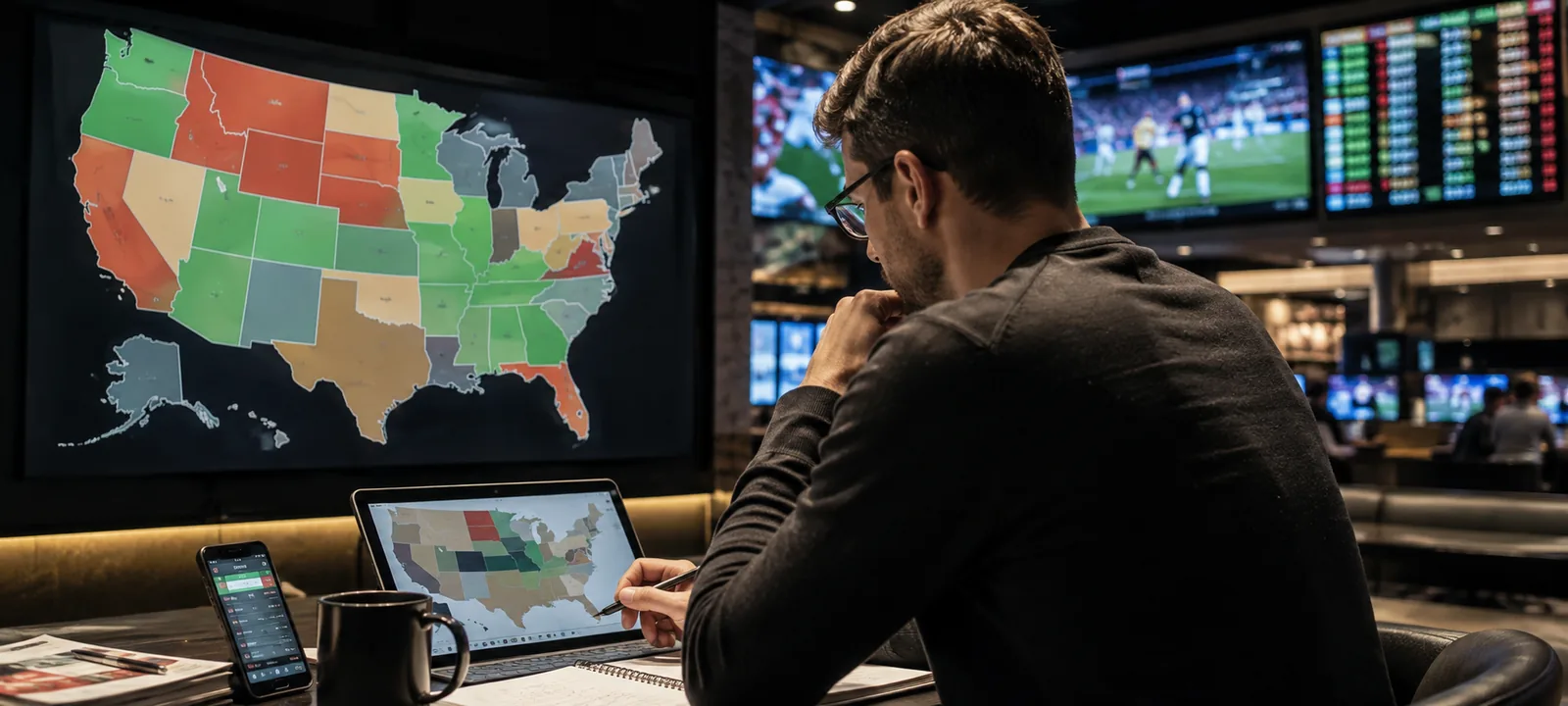
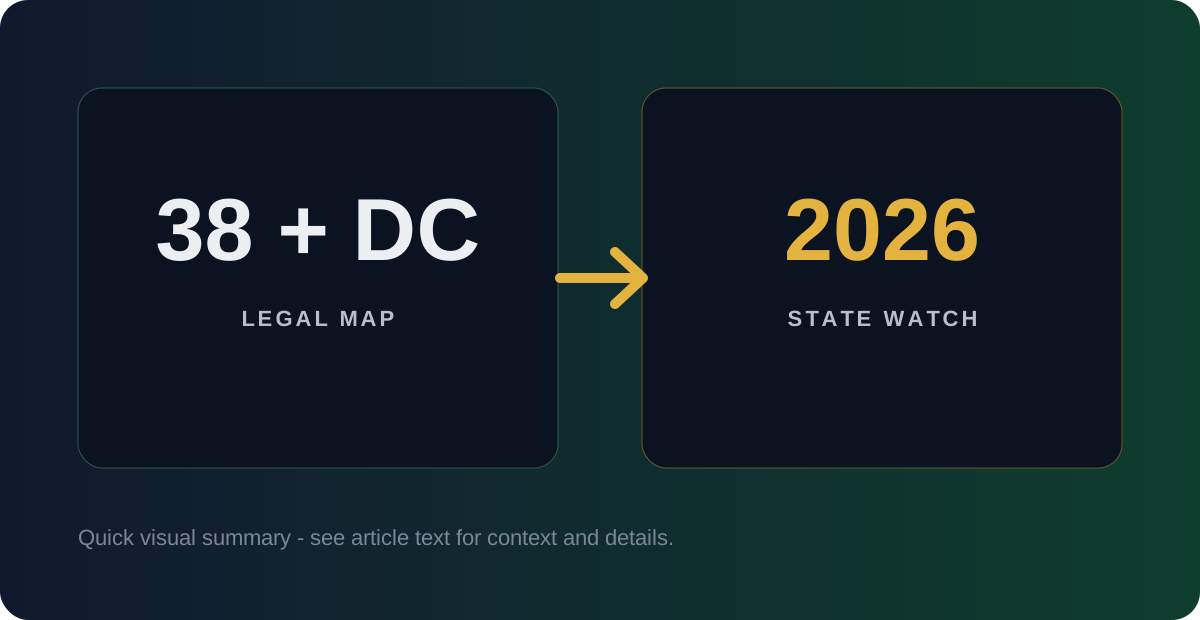
Legal sports betting has now reached 38 states plus Washington, DC, but the map is far from finished. Behind the scenes, dozens of state legislatures spent 2026 debating new bills, wrestling with tribal gaming agreements, and fighting over tax rates - with wildly different outcomes depending on the state. Here's a comprehensive look at where the legalization fight stands across the country as of August 2026.
| State | Status described | What to watch |
|---|---|---|
| Wisconsin | Online betting legalized April 9, 2026 | Mobile launch date |
| Nebraska | Retail betting only | Possible online ballot initiative |
| Minnesota | Launch unresolved | Tribal and racetrack market-access dispute |
| Mississippi | Retail legal, online bills stalled | Senate committee movement |
| Alabama | No launch | Constitutional amendment effort |
The States Closest to Launching
Wisconsin made the most concrete progress of any newly legalizing state this year. Online sports betting was officially legalized on April 9, 2026, though a specific launch date for mobile wagering has not yet been finalized. Wisconsin's path illustrates a pattern seen in several other states: legalization and launch are two very different milestones, often separated by a year or more of regulatory buildout, licensing, and rulemaking before bettors can actually place a wager.
Nebraska currently allows only in-person, retail sports betting, a framework Governor Pete Ricketts signed into law back in 2021. Notably, all betting on in-state collegiate games and player prop bets remains prohibited under current law. As of August 2026, there is an active push to expand Nebraska into online sports betting, with advocates eyeing a spot on the general election ballot at the end of the year. If successful, Nebraska could join the growing list of states allowing mobile wagering sometime in 2027.
States Stuck in Legislative Gridlock
Minnesota remains one of the most closely watched unresolved markets in the country. Legislation to legalize sports betting actually passed back in August 2022, but a launch date has still never been set. The holdup comes down to an unresolved dispute between the state's eleven federally recognized tribal nations, which operate all of Minnesota's existing casinos, and the state's racetrack operators, who are pushing for a piece of the sports betting market as well. With no resolution in sight, most industry observers now expect the standoff to carry into 2027 or beyond before Minnesota bettors can place a legal wager.
Mississippi presents a different kind of gridlock. The state has actually allowed retail, in-person sports betting since August 2018, one of the earliest states to launch after PASPA's repeal. But online sports betting remains illegal statewide. The Mississippi House passed two separate online betting bills during the 2026 legislative session, including HB 4074, which cleared the chamber by a lopsided 100-11 vote. Despite that overwhelming House support, both bills stalled in the Senate after the Gaming Committee chairman declined to hold hearings on either measure. That chairman is not up for reelection until 2028, meaning the same procedural bottleneck could continue blocking online wagering in Mississippi for several more legislative sessions.
Alabama has seen multiple sports betting bills fail over the past several years. The current vehicle for legalization is a proposed constitutional amendment (SB 257) that would let voters decide whether to authorize sports betting alongside a state lottery and expanded casino gaming. As of mid-2026, the measure has not gathered enough legislative support to advance to a statewide vote.
Alaska remains without a clear legalization timeline. The most recent bill, HB 145, was introduced in March 2025 but has seen no meaningful movement since. Until a new bill gains traction, Alaska residents interested in wagering on sports outcomes are largely limited to daily fantasy sports and federally regulated prediction markets rather than a licensed, state-regulated sportsbook.
The Long-Term Holdouts
A handful of large states remain conspicuously absent from the legal sports betting map altogether, and each faces its own unique political obstacles. Texas and California, the two largest state economies in the country, have both seen repeated legalization efforts fail amid disagreements over tribal gaming rights, tax structure, and which operators or existing gaming interests should control market access. Georgia has likewise seen sports betting legislation introduced in multiple sessions without reaching the finish line. In each of these states, the pattern tends to look similar: growing public and legislative interest, increasingly vocal lobbying from professional sports franchises eager to see betting-related sponsorship revenue, and yet no successful bill able to navigate the competing interests of tribal casinos, commercial operators, and state tax negotiators.
That lobbying push has become a notable subplot in the broader legalization story. Professional sports team owners have grown increasingly vocal advocates for legalization in holdout states, citing the multi-billion dollar handle projections and hundreds of millions in potential annual tax revenue that independent economic studies have associated with legal sports wagering markets elsewhere.
The Federal-State Tension Adding a New Wrinkle
Complicating the traditional state-by-state legalization picture in 2026 is the rise of federally regulated prediction markets, which allow trading on sports outcomes even in states where traditional sports betting remains illegal. This has created a strange new dynamic: residents of non-legal states like Alabama, Alaska, and Georgia can, in some cases, access sports-related wagering products through platforms regulated by the Commodity Futures Trading Commission rather than a state gaming commission - a workaround that has drawn fierce pushback from state attorneys general and traditional gaming interests, and that is currently being fought out in courts across the country.
This dynamic adds pressure on state legislators in holdout states. Lawmakers who have spent years blocking traditional sports betting legalization now face a market where a federally regulated alternative may already be reaching their constituents regardless of state law, a factor some analysts believe could accelerate legalization efforts in states that have otherwise resisted the trend.
Regulatory Trends Among Already-Legal States
Even in states where sports betting is firmly established, 2026 has brought a wave of new regulatory activity aimed at tightening consumer protections rather than expanding market access. Colorado has moved to implement new limits on deposit methods, including barring credit-card funding for sports betting accounts, alongside new deposit limit requirements. New Jersey has seen legislation introduced targeting rapid-fire proposition wagers on online platforms, reflecting growing concern among lawmakers about the speed and volume of same-game and live micro-betting markets. At the federal level, Congress has also seen proposals aimed at preventing members of Congress and federal officials from participating in prediction markets tied to political outcomes, an issue that has become intertwined with the broader sports prediction market debate.
Why Tribal Gaming Compacts Remain the Biggest Obstacle
Across nearly every holdout state, one factor keeps surfacing as the central obstacle to legalization: existing tribal gaming compacts. In states like Minnesota, California, and Oklahoma, federally recognized tribal nations operate the overwhelming majority of existing legal gambling under compacts negotiated with state governments, often decades ago and under legal frameworks that predate modern mobile sports betting entirely. Any sports betting legalization effort in these states has to navigate whether and how commercial operators like DraftKings and FanDuel can enter a market that tribal nations view as encroaching on gaming rights they've held exclusively for years.
This dynamic explains why some of the country's largest and most population-dense states remain sports betting holdouts despite obvious commercial demand and clear public interest. It's not primarily a question of whether lawmakers support legalization in the abstract; it's a question of how to structure a new market without disrupting existing tribal gaming revenue and jurisdictional arrangements that took years, sometimes decades, to negotiate in the first place. Minnesota's standoff between its eleven tribal nations and the state's racetrack operators is perhaps the clearest current example, but similar dynamics are playing out, with varying intensity, in most of the country's remaining unlegalized states.
The Role of Ballot Initiatives vs. Legislative Action
States have taken two broad paths toward legalization: direct legislative votes, as seen in states like Ohio and New York, or voter-approved ballot initiatives, as seen in Missouri's Amendment 2 and Nebraska's original in-person betting law. Ballot initiatives have become an increasingly common route in states where legislative gridlock has repeatedly blocked sports betting bills, since a well-funded ballot campaign can sometimes bypass entrenched legislative opposition entirely by putting the question directly to voters.
This pattern is playing out again in Nebraska, where advocates for online sports betting expansion are eyeing a general election ballot measure rather than waiting for the legislature to act on its own. It's a strategy that has proven successful in several other states over the past few years, though it typically requires significant financial backing from national sportsbook operators willing to fund signature-gathering and campaign efforts in exchange for eventual market access.
What Bettors Should Watch For
For bettors living in states where legal sports betting isn't yet available, a few practical takeaways apply heading into the rest of 2026:
- Wisconsin bettors should watch for an official mobile launch date announcement, which will likely follow a similar pre-registration and promotional rollout pattern seen in recent state launches like Missouri.
- Nebraska's ballot initiative push is worth tracking closely if it appears on the general election ballot later this year, since a successful vote could put the state on a path toward mobile wagering by 2027.
- Minnesota and Mississippi bettors should not expect fast movement, given that both states face structural, rather than simple political, roadblocks - tribal-racetrack disputes in Minnesota and a single committee chairman's opposition in Mississippi.
- Residents of non-legal states should carefully research the current legal status of any prediction market platform before using it, given the fast-moving and state-specific nature of ongoing litigation.
The overall trajectory since 2018 has been unmistakably toward expansion, with more than 30 states legalizing mobile sports betting in less than a decade. But as the remaining holdout states demonstrate, the final stretch of nationwide legalization has proven far more complicated than the first wave, often hinging on entrenched tribal gaming interests, narrow legislative majorities, and now, a brand-new regulatory wildcard in the form of federally licensed prediction markets.
How Sportsbook Operators Are Positioning for Future Launches
National sportsbook operators don't wait for a state to legalize before beginning to plan their entry. In states with active legalization pushes, operators like DraftKings, FanDuel, and BetMGM frequently engage in advance lobbying, sponsorship deals with in-state professional sports franchises, and public messaging campaigns designed to build brand awareness well before a single legal wager can be placed. This groundwork often becomes especially visible once a ballot initiative or legislative vote gets close, as operators recognize that early positioning can translate into a stronger customer base once a market actually opens, similar to the pre-registration surges seen in states like Missouri ahead of their official launch dates.
This dynamic also helps explain why some legalization pushes move faster than others once they gain real momentum. States with a large, sports-passionate population and multiple professional sports franchises - the kind of market operators are eager to enter - often see more aggressive lobbying and campaign spending in support of legalization efforts than smaller states with less obvious commercial upside, even when the underlying political and tribal-compact obstacles are similar in complexity.
Tracking Legislation Throughout the Rest of 2026
With state legislative sessions running on different calendars throughout the year, sports betting bills can move quickly once they gain traction, sometimes with only a few weeks of public visibility before a floor vote. Bettors and industry watchers hoping to track legalization progress in their own state most reliably by monitoring official state legislature bill-tracking pages alongside dedicated gaming industry trackers, since local news coverage of these bills can be inconsistent until a vote is imminent. Given how many states currently have some form of active legislation, constitutional amendment proposal, or ballot initiative in progress, the overall map of legal sports betting in the US remains very much a work in progress heading into 2027.
Frequently Asked Questions
How many states currently have legal sports betting? As of August 2026, legal sports betting exists in 38 states plus Washington, DC, in some form, though the specific availability of mobile versus retail-only wagering varies significantly from state to state.
Which major states still don't have legal sports betting? Texas, California, Georgia, Alabama, and Alaska remain among the most notable states without a fully legalized, operational sports betting market, each facing distinct political and regulatory obstacles.
Why does Minnesota have a law but no actual sports betting market? Minnesota's 2022 legalization law has never resulted in a launch because of an unresolved dispute between the state's tribal gaming nations and its racetrack operators over market access and revenue sharing, with no resolution currently in sight.
Can residents of non-legal states bet on sports through other means? Some residents access daily fantasy sports contests or federally regulated prediction markets, though the legal status of sports-related prediction market contracts is currently being contested in several states and continues to evolve.
Always gamble responsibly and within your means. If you or someone you know has a gambling problem, help is available by calling or texting 1-800-GAMBLER.